
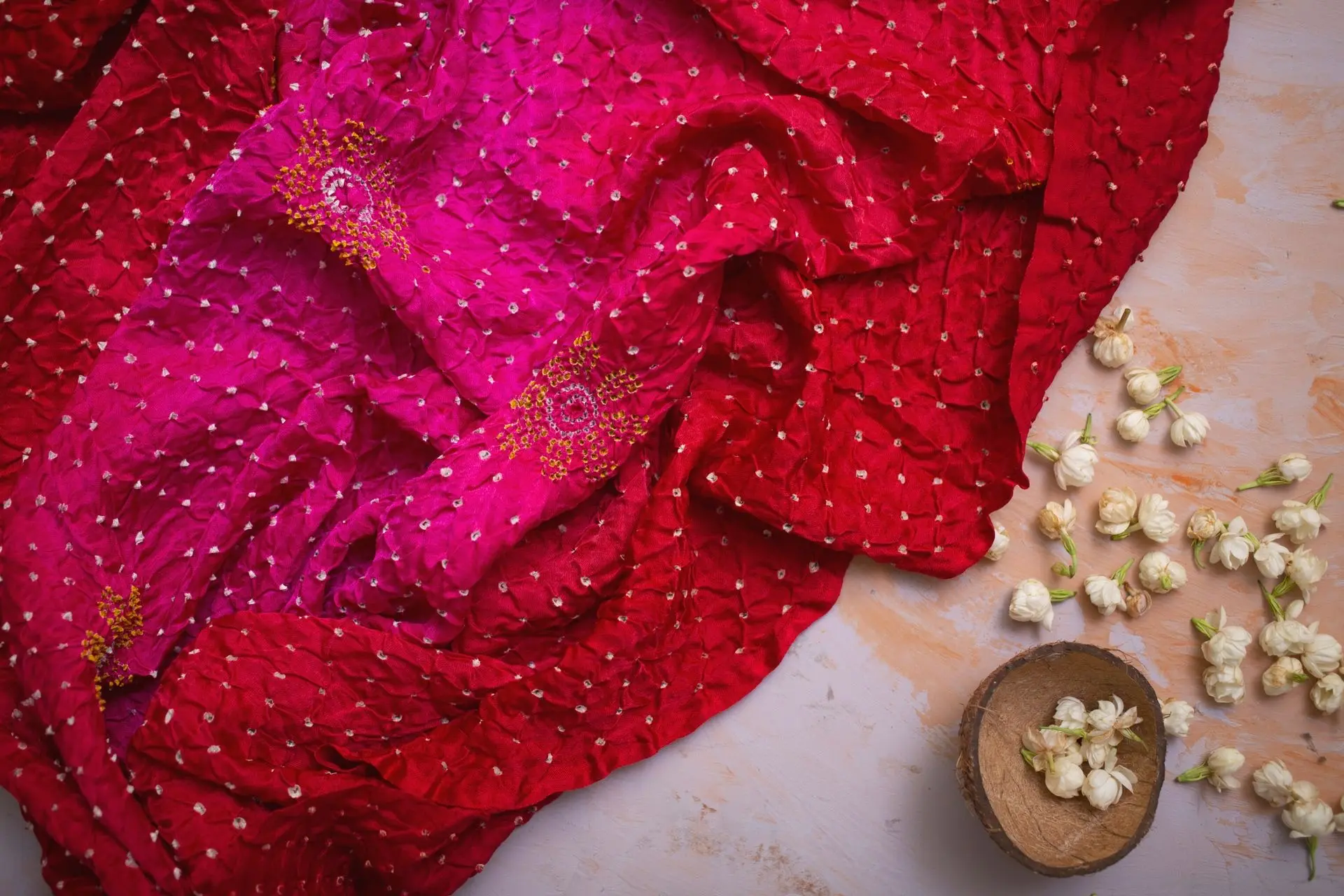
At a distance, Bandhani can look almost printed, which these days it often is, but look closely enough and the dots start to become the story.
The pattern comes from a textile technique where the dots were never printed onto the surface at all. They appeared because hundreds, sometimes thousands, of tiny sections of fabric were tied before the cloth entered the dye bath. The tied areas resisted the dye. Open them afterwards, and the untouched cloth appeared as dots. That simple idea can produce surprisingly complicated designs.
So what actually is Bandhani?
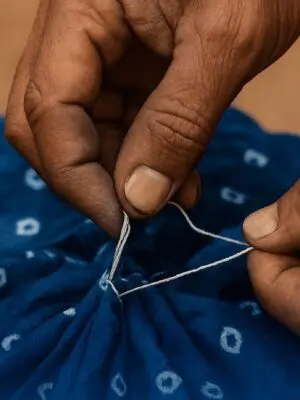
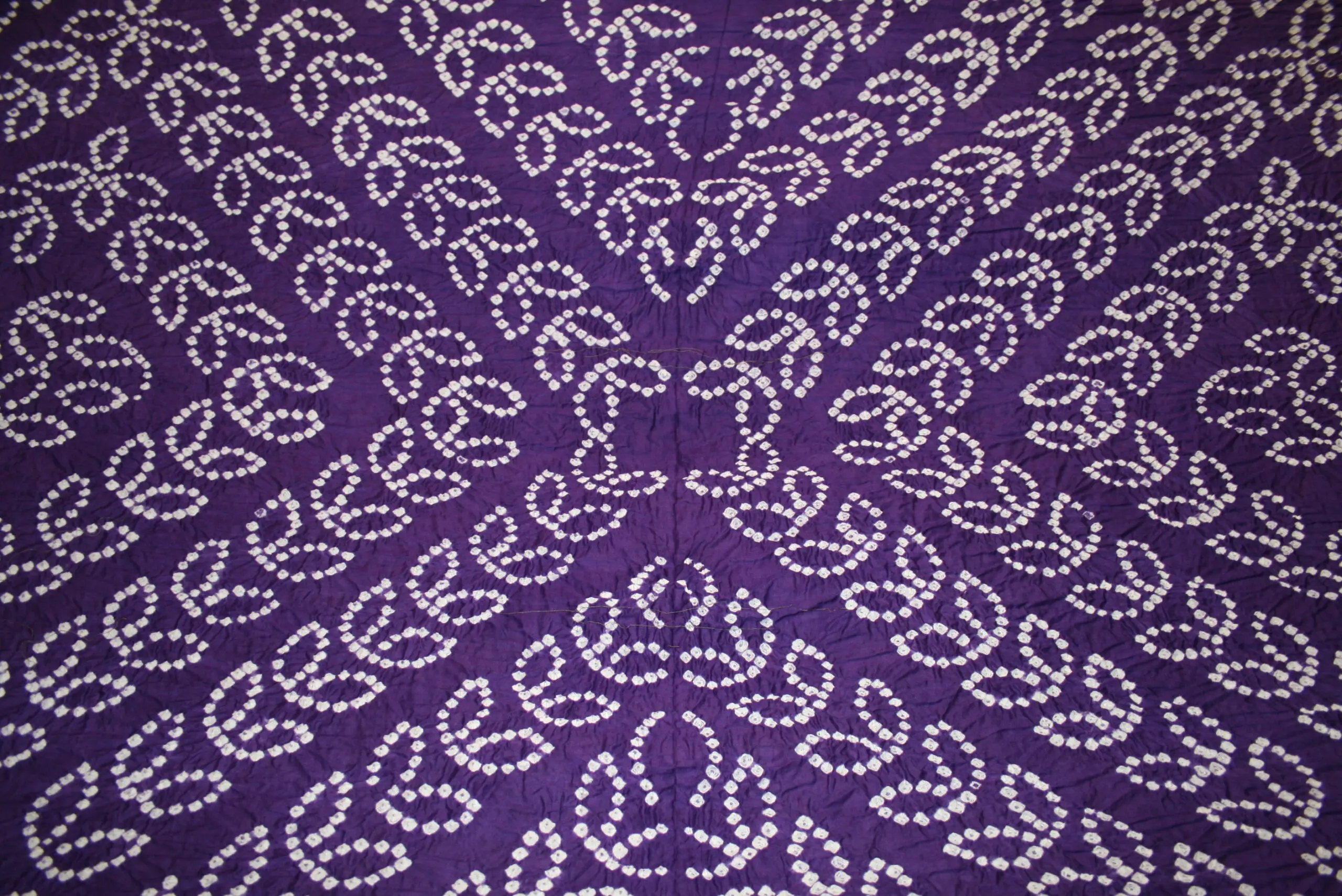
Bandhani is a form of resist dyeing associated especially with Gujarat and Rajasthan. A small section of cloth is pinched, raised and bound tightly with thread. When the fabric is dyed, that binding stops colour from reaching the cloth underneath. Remove the thread and a small undyed mark remains. Repeat the process over and over and those individual marks become lines, circles, flowers, grids and much larger compositions.
The name itself comes from the idea of tying or binding. You will also see Bandhani written as Bandhni or Bandhej.
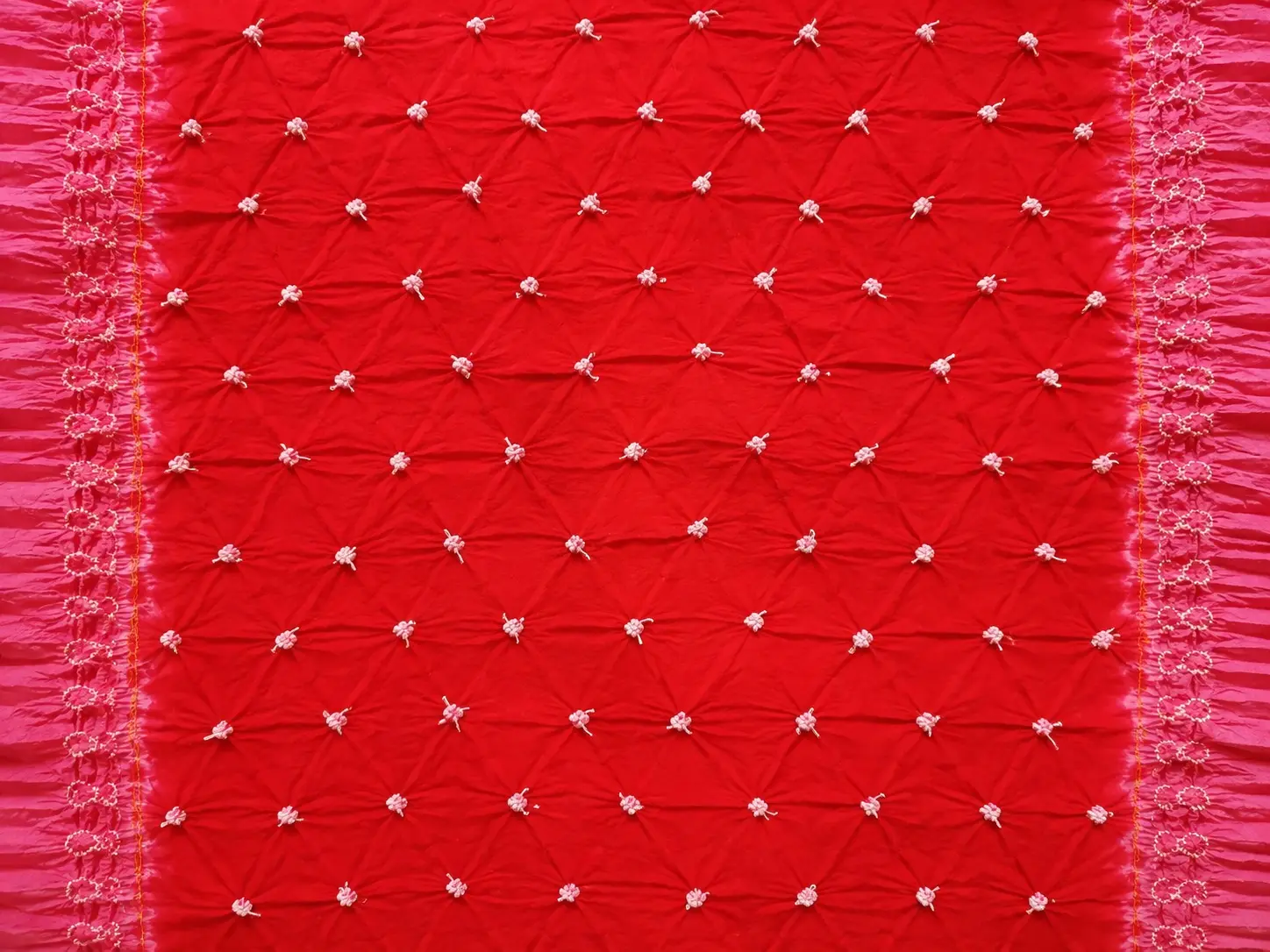
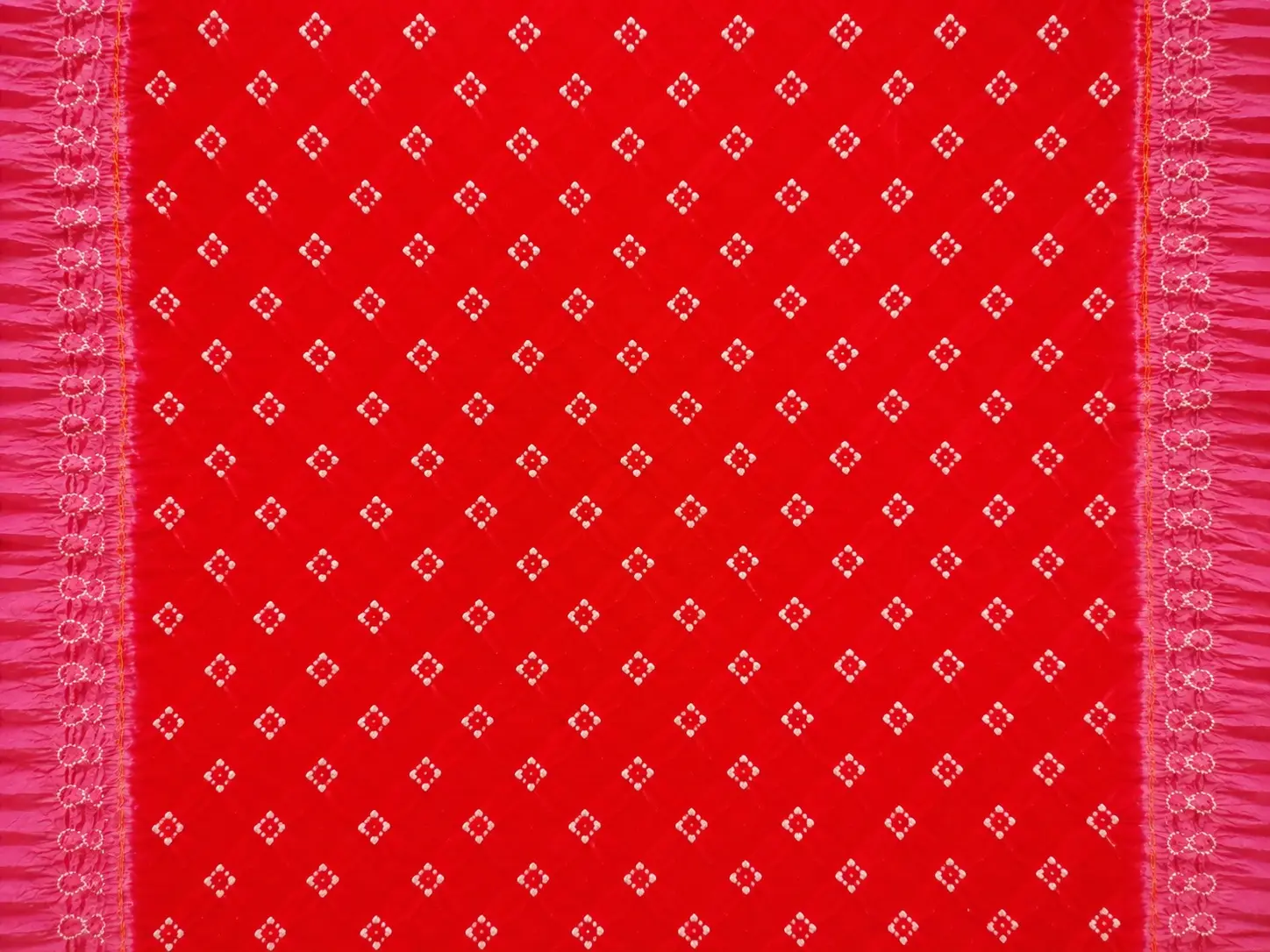
However, the important part is what you cannot see.
Under every tight binding is a little patch of cloth that the dye cannot easily reach. That is the “resist”. Different forms of resist dyeing achieve this with wax, paste, stitching, clamps or tied thread. Bandhani uses the tie. A finished dot is therefore not something added to the fabric. It is a small part of the original fabric that was protected while everything around it changed colour.
Bandhani is not a dot print first. It is a way of keeping dye away from tiny parts of cloth.
One dot is easy. Thousands are another matter.
The basic idea sounds almost suspiciously simple.
Pinch. Tie. Dye. Untie.
The difficulty is repetition and control.
Traditional Bandhani makers can build designs from enormous numbers of tiny ties. The Rajasthan government’s craft documentation notes that even a metre of cloth can contain thousands of knots. The dots can also be organised into named patterns rather than scattered randomly across the fabric.
For multicoloured work, the process becomes more involved. Parts of the cloth can be tied, dyed, protected again and exposed to another colour. One traditional approach works progressively from lighter shades towards darker ones.
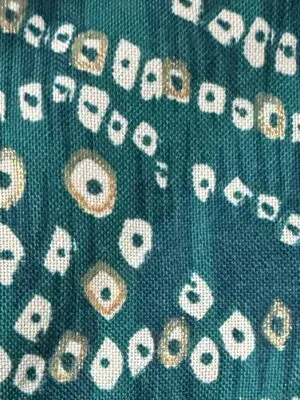
And this is where the name gets confusing
“Bandhani” now describes a look as well as a craft.
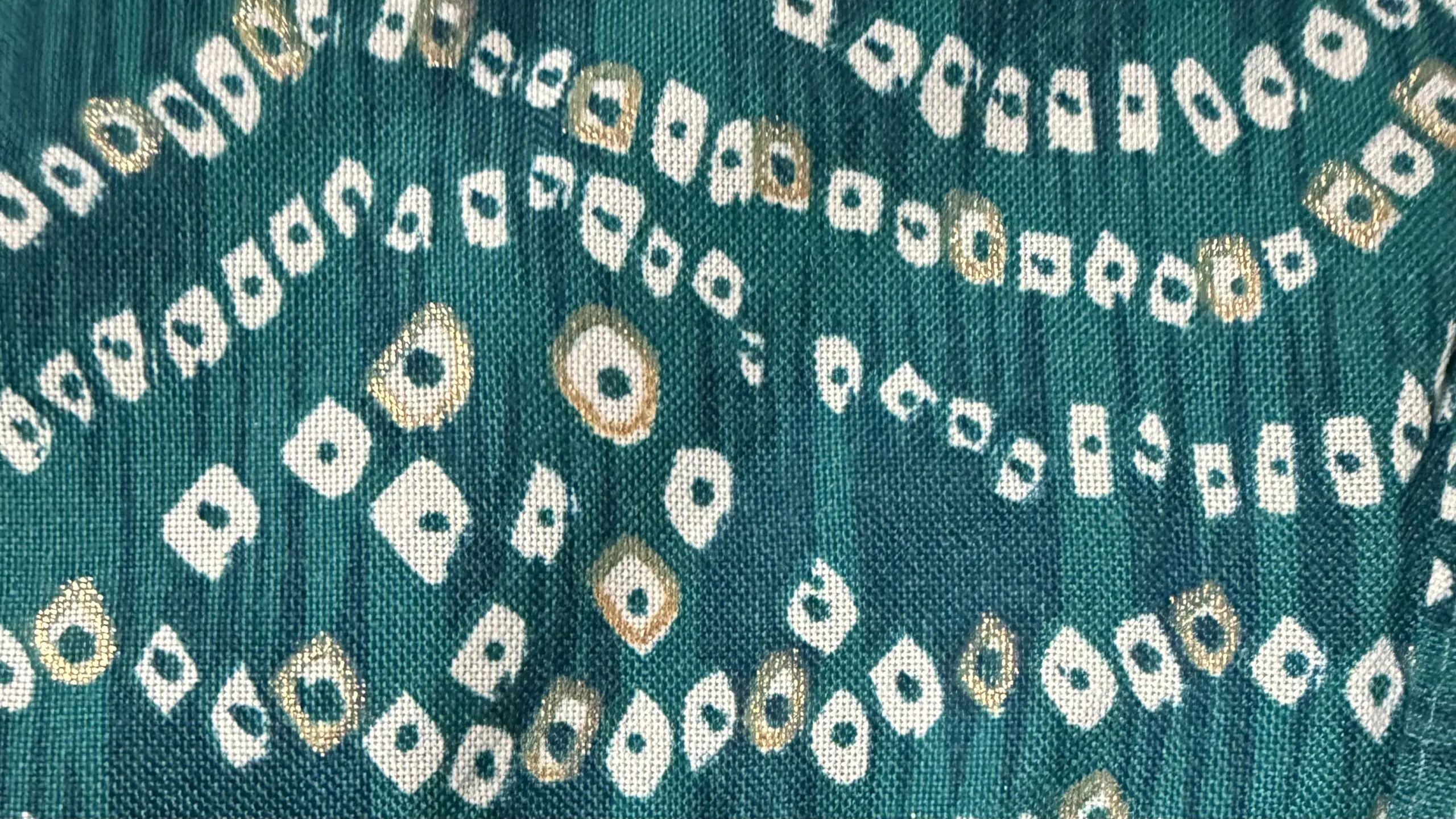
That means a garment covered in familiar Bandhani-style dots is not automatically hand-tied Bandhani.
Our own Bandhani Printed Cotton Kurta Salwar and Dupatta is a good example. The product is cotton, made in India and explicitly listed as printed. We are not claiming that someone individually tied every dot on it.
Bandhani Printed Cotton Kurta Salwar and Dupatta
Bandhani Print Indian Ethnic Readymade Cotton Kurta with Patiala Salwar and Dupatta.
That distinction sounds small, but it matters.
A printed garment can borrow the colours, spacing and visual vocabulary associated with Bandhani while being produced through a completely different process. Calling both things identical makes it harder to understand what the original craft actually involves while making the real thing itself less interesting.
Two fabrics can share a visual idea while being made in very different ways… Can you spot the difference?
How old is Bandhani?
This is where textile history gets a little less tidy.
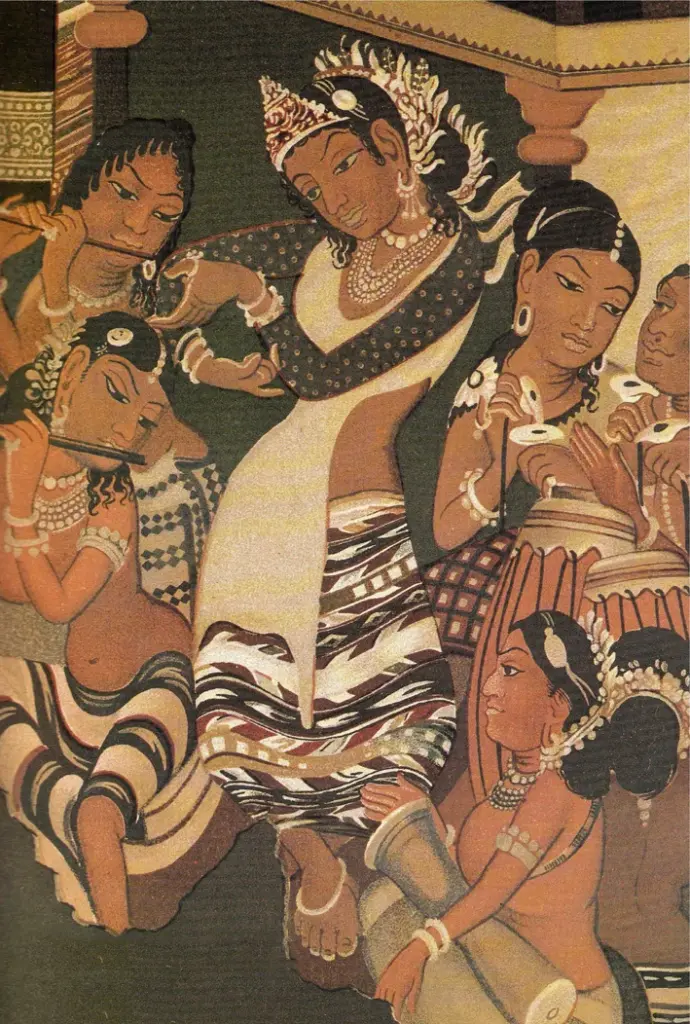
You will often see Bandhani described online as a “5,000 year old craft”. Indian government craft material does connect the history of Bandhani with very early Indian textile traditions and points to the Ajanta paintings and later written references.
There is a useful distinction, though. Evidence that people in the Indus Valley knew how to dye cloth thousands of years ago does not by itself prove that every part of the modern Bandhani process existed in exactly the same form.
IIT Bombay’s D’Source notes evidence of dyeing from the Indus Valley period and describes Bandhani as a long-standing tradition associated particularly with Gujarat and Rajasthan. Another D’Source record places the craft’s historical presence at least around the sixth century.
So, “ancient” is fair but there is no perfectly neat birthday for Bandhani.
Why don’t all Bandhani pieces look the same?
Because “tiny tied dots” is a method, not a single design.
Change which sections you tie, how closely you place them and which colours you dye, and the result changes with it. Traditional terminology includes names for different arrangements and tying styles, and regional work from Gujarat and Rajasthan can differ in colour and composition.
Some pieces are dominated by tiny fields of dots. Others use them to draw much larger geometric or figurative shapes. In particularly fine work, you stop noticing individual dots first and begin seeing the image they collectively form.
A few words you might run into
Names used for the tie-dye tradition and textiles made using it.
Another name commonly used for the craft, particularly in western India.
A family of techniques where part of a textile is protected so it does not take up dye. Bandhani achieves that protection through tying.
A printed design that imitates or takes inspiration from the visual appearance of Bandhani. It should not automatically be treated as hand-tied Bandhani.
The next time you see the dots
You do not need to memorise pattern names or identify a region from ten metres away, just look again.
If it is traditional Bandhani, every little undyed point began as a physical decision. Someone had to decide where the cloth should remain untouched, pinch that tiny section and bind it before the colour arrived.
And if it is a Bandhani print, like the cotton set in our own collection, the pattern still points back to that idea. It just reaches the finished garment by a different route.
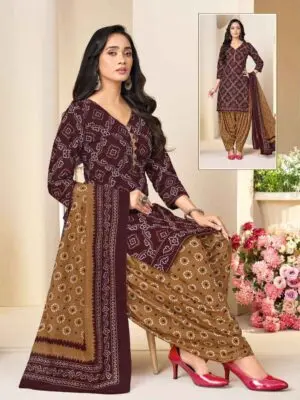
Bandhani Printed Cotton Kurta Salwar and Dupatta
Bandhani Print Indian Ethnic Readymade Cotton Kurta with Patiala Salwar and Dupatta.
Teal and Plum color Bandhani Boys Kurta Pyjama Set
A refined boys kurta pyjama set featuring intricate white bandhani-inspired patterns in two rich colourways. Finished with a structured mandarin collar, neat button placket and crisp white pyjamas, this polished ensemble is perfect for weddings, festivals and special family celebrations.
Join the conversation